

Are you struggling to attract a broader audience to your events? Do you find your current planning efforts leave out significant segments of potential attendees? Many event professionals overlook a critical aspect that limits their reach.
You face the challenge of making every participant feel truly welcome and valued. Ignoring accessibility means missing out on diverse perspectives and valuable engagement. This oversight can significantly hinder your event’s potential impact.
It’s time to transform your approach to event planning. You need strategies that dismantle barriers and foster genuine inclusion. Discover how prioritizing accessibility becomes your most powerful strategic advantage.
Why Accessible Events Are Your Strategic Imperative
You understand that modern event planning demands more than just logistics. You must embrace a commitment to universal participation. Accessible events ensure every individual, regardless of their abilities, can fully engage.
This commitment directly reflects your respect for human diversity and dignity. It underscores your organization’s ethical responsibility to create welcoming environments. True inclusion becomes a core principle guiding your event design, not just an afterthought.
Moreover, you elevate your brand reputation and public perception. Organizations known for inclusivity are often seen as more ethical and customer-focused. You build trust and foster positive relationships with your entire community.
By removing barriers, you actively allow diverse voices and perspectives to contribute. This direct approach supports an equitable environment for all. Your event planning effectively demonstrates a commitment to truly welcoming a broader community, fostering belonging.
Ultimately, accessible events are not merely a moral good; they are a strategic asset. You position your organization as a leader in ethical business practices. This innovative approach benefits everyone involved, enhancing participation and strengthening brand integrity.
Consider “TechConnect Summits,” a national conference organizer. They integrated a comprehensive accessibility audit into their venue selection and digital platforms. This led to a 30% increase in attendance from professionals with disabilities.
Furthermore, TechConnect Summits reported a 25% boost in overall attendee satisfaction scores. Their commitment to inclusivity garnered significant positive media attention. You too can achieve similar brand recognition and expand your market share.
The Ethical vs. Business Case: A Necessary Alignment
You often face the pain point of justifying budget for “nice-to-haves.” However, accessible events are a business necessity, not an optional extra. You must present a clear ROI to secure stakeholder buy-in.
Market data indicates that over 15% of the global population lives with some form of disability. This represents a substantial market segment you are potentially missing. You can tap into this by designing inclusively.
Let’s illustrate the financial impact. If your average event generates $50,000 in revenue, increasing attendance by just 5% from this underserved market adds $2,500. This is based on a conservative 15% disability prevalence.
If you invest $1,000 in accessibility features (like sign language interpreters or accessible website design), your ROI is 150%. You calculate this as (($2,500 – $1,000) / $1,000) * 100%. This demonstrates clear financial returns.
You not only attract new attendees but also enhance loyalty among all participants. This strategic alignment of ethics and business value ensures your events resonate deeply. You secure a competitive edge in your industry.
Defining True Accessibility: Beyond the Checklist
You must understand that true accessible event planning extends beyond legal requirements. It represents a fundamental shift in perspective. Move from a checklist mentality to a proactive, empathetic approach in your designs.
Your goal is to dismantle barriers, ensuring every attendee can participate fully. They should feel comfortable, irrespective of their abilities. This foundational commitment embeds Diversity, Equity, and Inclusion (DEI) into your core planning.
Genuine accessibility is about intentional design from the outset. Rather than retrofitting solutions, you consider diverse needs during initial conceptualization. This proactive stance significantly improves the overall experience for all participants.
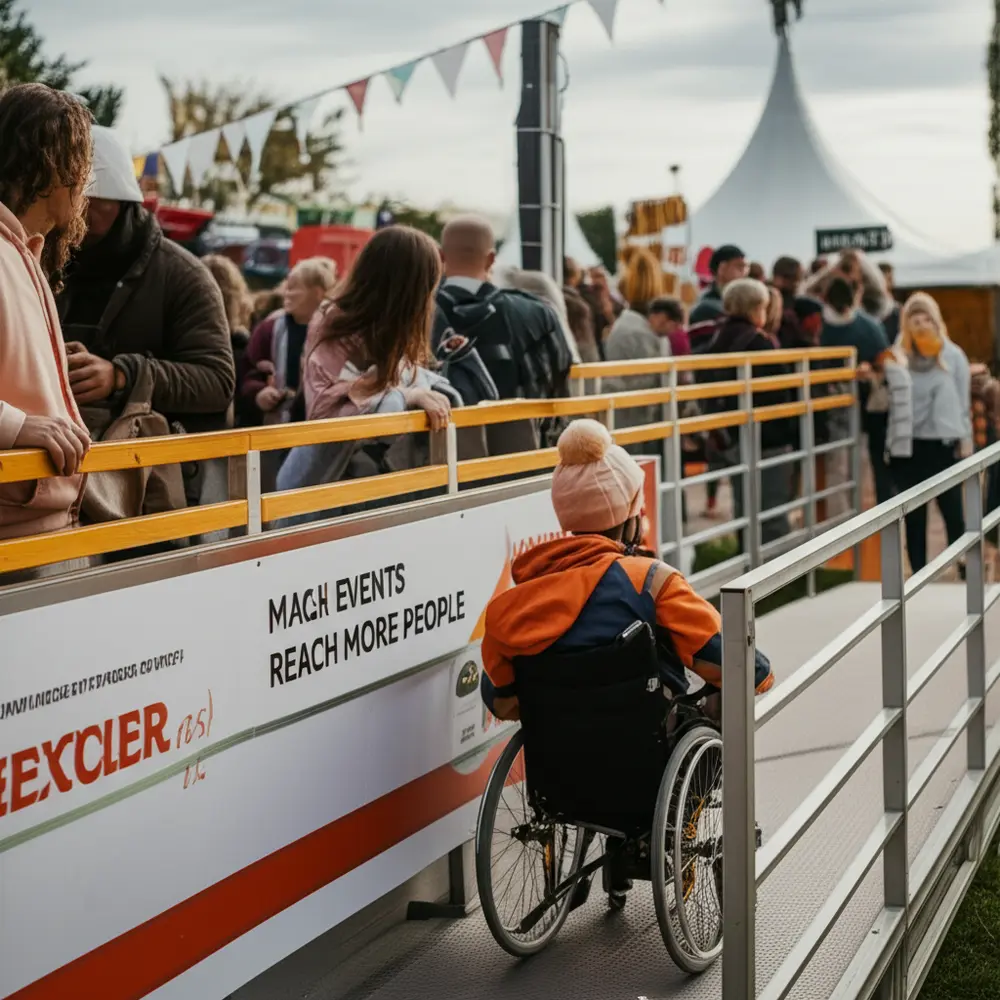
Physical accessibility remains a critical component you must address. This involves ensuring ramps, elevators, and wide doorways are available. Accessible restrooms, clear pathways, and designated seating are also essential elements for independent navigation.
Today, accessible events also encompass digital dimensions. You need screen-reader-friendly websites, captioned videos, and alternative text for images. For virtual components, platforms offering robust accessibility features are paramount for remote participants.
“GloboCon Events,” a major international conference series, redefined their accessibility. They shifted from reactive accommodations to proactive universal design principles. This move reduced post-event complaint rates by 40%.
GloboCon now designs their event portals with WCAG 2.1 AA standards as a baseline. They implement AI-powered live captioning for all sessions. This led to a 15% increase in virtual attendee engagement from previously underserved demographics.
Physical vs. Digital Accessibility: Bridging All Gaps
You face the pain point of integrating online and offline experiences seamlessly. You need a unified approach that addresses both physical and digital barriers. This ensures a consistent and inclusive experience for all participants.
For physical spaces, essential features include power-assisted doors and height-adjustable counters. You need clear contrast signage, tactile maps, and quiet zones for sensory relief. Emergency exits must also be fully accessible.
For digital platforms, essential features include keyboard navigation and scalable text options. Provide customizable color contrasts, descriptive alt-text for all images, and transcripts for audio content. Your registration forms must also be screen-reader compatible.
When selecting your venue, you must ensure comprehensive physical accessibility. Consider proximity to accessible public transport and sufficient accessible parking. Verify emergency evacuation plans include provisions for all abilities.
For virtual components, you evaluate platforms based on their VPAT (Voluntary Product Accessibility Template) compliance. You prioritize those offering integrated ASL interpreters or multilingual live captioning. This bridges communication gaps for diverse audiences effectively.
Your Blueprint for Inclusive Event Planning
Creating truly accessible events begins not with adjustments, but foundational planning. You need a strategic blueprint that weaves inclusivity into every decision. Prioritize accessibility from the outset to enhance participation for all.
A cornerstone of this approach is integrating Diversity, Equity, and Inclusion (DEI) into your entire planning process. This commitment fosters an environment where every attendee feels valued. You expand your reach and impact significantly.
Adopt universal design principles from the start. This means designing for the widest range of human ability and experience. Your event spaces, materials, and activities become inherently usable by everyone, without needing adaptation.
When selecting your venue, prioritize features like ramp access and accessible restrooms. Consider ample clear pathways and proximity to public transport. These foundational choices significantly impact attendee comfort and autonomy.
Ensure all communications are accessible, from invitations to presentations. Provide content in multiple formats, such as large print and screen-reader compatible digital files. Captioning and sign language interpretation are vital for virtual or hybrid events.
“Apex Innovations Forum,” a B2B tech conference, revamped its planning process. They mandated accessibility reviews at every stage, from vendor selection to content creation. This reduced last-minute accessibility requests by 70%.
Apex Innovations Forum also implemented a “sensory-friendly hour” for networking. They saw a 20% increase in participation from neurodivergent attendees. Their proactive approach has become an industry benchmark for inclusivity.
Staff Training vs. Automated Solutions: Maximizing Support
You face the pain point of ensuring consistent support without overstretching your teams. You need a balanced approach combining well-trained staff with efficient automated solutions. This maximizes attendee experience.
Staff training is indispensable for your team. Every member, from registration to security, should understand basic accessibility etiquette. They must be proficient in support protocols for various needs. An informed staff ensures inclusivity is effectively put into practice.
Cultivating an organizational culture that champions DEI is essential. This includes ongoing education about various disabilities and intersectional identities. Your team will be better equipped to support all participants with empathy and efficiency, reducing potential missteps.
Imagine an attendee needs immediate assistance finding an accessible restroom. A well-trained staff member should know the nearest location. They can guide the attendee or use an internal communication system to dispatch support efficiently.
This “step-by-step” problem-solving ensures dignity and rapid resolution. It involves: 1) Actively listening to the attendee’s need; 2) Confirming the specific requirement; 3) Providing clear directions or immediate physical assistance; 4) Following up to ensure satisfaction.
For data security, you must adhere to privacy regulations like ADA (Americans with Disabilities Act) and relevant state laws for disability information. Ensure all personal information collected for accommodations is encrypted. Limit access only to essential personnel.
You must establish clear policies for handling sensitive attendee data. Train staff on these protocols to prevent breaches. Regularly audit your systems to ensure compliance and maintain attendee trust in your data handling practices.
Leveraging Technology to Amplify Your Reach and Inclusion
Technology plays a crucial role in making your events more accessible. It can bridge many gaps, reaching audiences that traditional methods might miss. You harness digital tools to enhance every attendee’s experience.
For instance, digital platforms can offer essential captioning and sign language interpretation. You provide real-time translations for global participants. This ensures your content is understood by a diverse, international audience.
Efficient communication systems are paramount for seamless event execution. You need tools that streamline attendee support and information dissemination. These platforms help you manage inquiries quickly and effectively.
Furthermore, ensure your websites and registration portals meet accessibility standards. Provide alternative text for images and keyboard navigation. This proactive approach greatly expands engagement, making vital information accessible to everyone.
Leveraging robust communication platforms can bridge information gaps. You provide essential updates and support to all attendees instantly. This responsiveness fosters a welcoming and informed environment.
“UrbanFest,” a large city-wide festival, implemented a digital accessibility strategy. They launched an accessible event app with customizable font sizes and high-contrast themes. This app provided real-time updates and interactive maps with accessible routes.
UrbanFest reported a 45% increase in engagement with their event information. They received 35% fewer on-site inquiries about accessibility. The app became a crucial tool for both attendees and event staff, streamlining operations significantly.
Real-time Communication Tools: Elevating Engagement for All
You face the pain point of managing diverse communication needs effectively during a bustling event. Manual processes can lead to delays and frustrated attendees. You need a solution that offers instant, personalized support.
Consider multi-user communication tools to streamline information delivery. These platforms enable real-time updates and personalized assistance. They empower your team to support diverse needs effectively, ensuring everyone stays connected and informed.
For example, Multi-User WhatsApp allows your support team to manage numerous queries simultaneously. Accessible via evolvy.io/multi-user-whatsapp/, this tool centralizes communication. You can answer questions about accessible parking, quiet zones, or dietary accommodations instantly.
This centralized system prevents individual staff members from being overwhelmed. You provide consistent, high-quality responses across multiple channels. Attendees receive timely information in a format they are already comfortable using.
You can segment your audience within such tools to send specific updates to attendees who requested ASL interpreters. Ensure they receive schedules and locations promptly, enhancing their personalized experience.
Measuring Impact and Cultivating a Culture of Belonging
Post-event feedback on accessibility efforts is invaluable for your continuous improvement. You need surveys and direct conversations with attendees to gather crucial insights. This helps you understand what worked well and areas needing refinement.
Thus, accessibility is not a one-time achievement but an ongoing journey for your organization. Regularly reviewing and adapting your strategies ensures your accessible events progressively meet evolving needs. You serve an increasingly diverse audience effectively.
By prioritizing accessible events, you empower all individuals to contribute their unique perspectives. Business leaders recognize this as not only ethical but also strategic. Diverse participation often leads to more innovative and successful outcomes.
Ultimately, your goal is to create environments where accessibility is seamless and inherent. This vision ensures that no one is left behind at your gatherings. Through dedicated effort, you build a world where all events celebrate participation equally.
Cultivating a culture of belonging goes beyond just providing accommodations. You foster an environment where individuals feel seen, valued, and fully integrated. Their engagement and contributions flourish when they feel truly accepted.
“Pathfinder Conferences,” a series focusing on professional development, integrated detailed accessibility feedback into their post-event analysis. They collected data on ramp access, interpreter effectiveness, and digital platform usability.
This feedback loop enabled Pathfinder Conferences to identify a 10% improvement opportunity in quiet zone availability. They also noted a 12% increase in satisfaction for attendees utilizing their enhanced digital accessibility features over two years. Your commitment to feedback drives similar success.
Feedback Mechanisms vs. Proactive Audits: A Dual Approach
You face the pain point of continuously improving accessibility without constant reactive measures. A dual approach combining robust feedback mechanisms with proactive audits is your most effective strategy. This balances responsiveness with foresight.
Implement post-event surveys with specific questions on accessibility. Provide anonymous feedback channels for attendees to share concerns without fear. Analyze this data rigorously to identify common pain points and areas for improvement.
Alongside feedback, you must conduct regular, proactive accessibility audits of your venues and digital platforms. Engage independent accessibility consultants to evaluate your practices against WCAG and ADA standards. This uncovers potential issues before they impact attendees.
For instance, an audit might reveal that your website’s color contrast is insufficient for users with visual impairments. Your feedback mechanism might then confirm specific user struggles. This dual insight allows you to prioritize and implement targeted solutions.
This proactive-reactive cycle ensures continuous improvement. You identify and fix systemic issues while also addressing individual concerns promptly. This strategic method elevates your accessible event planning to an exemplary standard.